

Magazines cover a wide array subjects, including but not limited to fashion, lifestyle, health, politics, business, Entertainment, sports, science,


Breaking News :

Magazines cover a wide array subjects, including but not limited to fashion, lifestyle, health, politics, business, Entertainment, sports, science,
 By admin
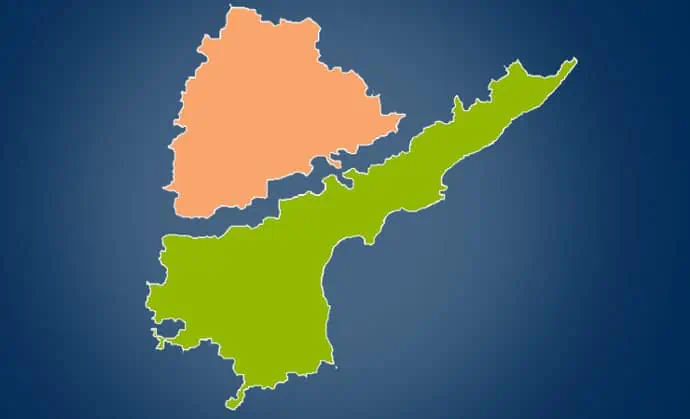
Despite the political and geographical division of Andhra Pradesh and Telangana into two separate states in 2014, Telugu people have remained united in many ways due to their shared history, culture, language, and values. Here are several reasons why Telugu people have maintained a sense of unity, even after the bifurcation:
Sports: V.V.S. Laxman – The Elegant Stalwart of Indian Cricket Vangipurapu Venkata Sai Laxman, popularly known as V.V.S. Laxman, is one of the finest cricketers India has ever produced. Known for his elegant and graceful batting style, Laxman was a key figure in Indian cricket, particularly in Test matches. His most memorable achievement came during the 2001 Test series against Australia, where his match-winning innings of 281 at Eden Gardens became part of cricketing folklore. Laxman’s ability to perform under pressure earned him the reputation of being one of India’s most dependable players, and he continues to contribute to Indian cricket as a coach and mentor to young talent.
Cinema: S.S. Rajamouli – A Global Cinematic Visionary S.S. Rajamouli, a director par excellence, has taken Indian cinema to the global stage with his epic storytelling and grand visuals. Best known for his magnum opus Baahubali (2015, 2017), Rajamouli’s vision and technical brilliance have earned him international acclaim. Baahubali became the highest-grossing Indian film at the time, and its impact was felt across the globe, setting new benchmarks for Indian cinema in terms of scale, storytelling, and VFX. His recent film RRR (2022) further cemented his global standing, even receiving recognition at prestigious international awards. Rajamouli’s work has not only entertained but also elevated the reputation of Telugu cinema worldwide.
Cinema: K. Viswanath – A Maestro of Indian Classical Cinema K. Viswanath, a legendary filmmaker and Dadasaheb Phalke Award recipient, is celebrated for his classical and artistic approach to filmmaking. Known for blending social issues with traditional values, Viswanath’s films often highlighted the beauty of Indian culture and art forms. Films like Sankarabharanam (1979), which focused on classical music, and Sagara Sangamam (1983), which delved into classical dance, received national and international acclaim. His films transcended language barriers and resonated with audiences globally, portraying human emotions, art, and cultural heritage with unmatched grace. Viswanath’s legacy in Indian cinema is one of timelessness, and his work continues to inspire filmmakers today.
Politics: P.V. Narasimha Rao – The Architect of India’s Economic Reforms Pamulaparti Venkata Narasimha Rao, the 9th Prime Minister of India (1991–1996), is often credited as the architect of India’s economic liberalization. At a time when India faced a severe economic crisis, Rao took bold steps to open up the Indian economy, paving the way for globalization and economic growth. His government introduced key reforms that transformed India into one of the fastest-growing economies in the world. Rao, a multilingual scholar, also had a deep interest in literature and culture, contributing to Telugu literature and translating works from other languages. His leadership marked a turning point in India’s modern history, and his economic policies continue to shape the nation’s trajectory today. Conclusion While Andhra Pradesh and Telangana may be politically and geographically separate, the Telugu language, shared culture, economic interdependence, and diaspora unity keep the people of both states closely bonded. Their pride in their Telugu identity and common cultural roots continues to foster a sense of solidarity that transcends state boundaries. This unity is a testament to the strength of their shared heritage and vision for a prosperous future, both within India and across the globe.

In a historic achievement, India has officially surpassed Japan to become the world’s fourth-largest economy, reaching a monumental…
 Byadmin
Operation Sindoor and Its National Impact On May 7, 2025, India launched Operation Sindoor, a precision military strike…
ByadminAllegations that leading software companies like Tata Consultancy Services (TCS) are coercing employees into resigning have gone viral…
ByadminThe highly anticipated Pushpa 2: The Rule is making waves—not just for its cinematic appeal but now also…
Byadmin


